> For the complete documentation index, see [llms.txt](https://doc.wearepatchworks.com/product-documentation/llms.txt). Markdown versions of documentation pages are available by appending `.md` to page URLs; this page is available as [Markdown](https://doc.wearepatchworks.com/product-documentation/patchworks-services/working-with-services/the-anatomy-of-a-service/service-settings.md).
# Service settings
## Introduction
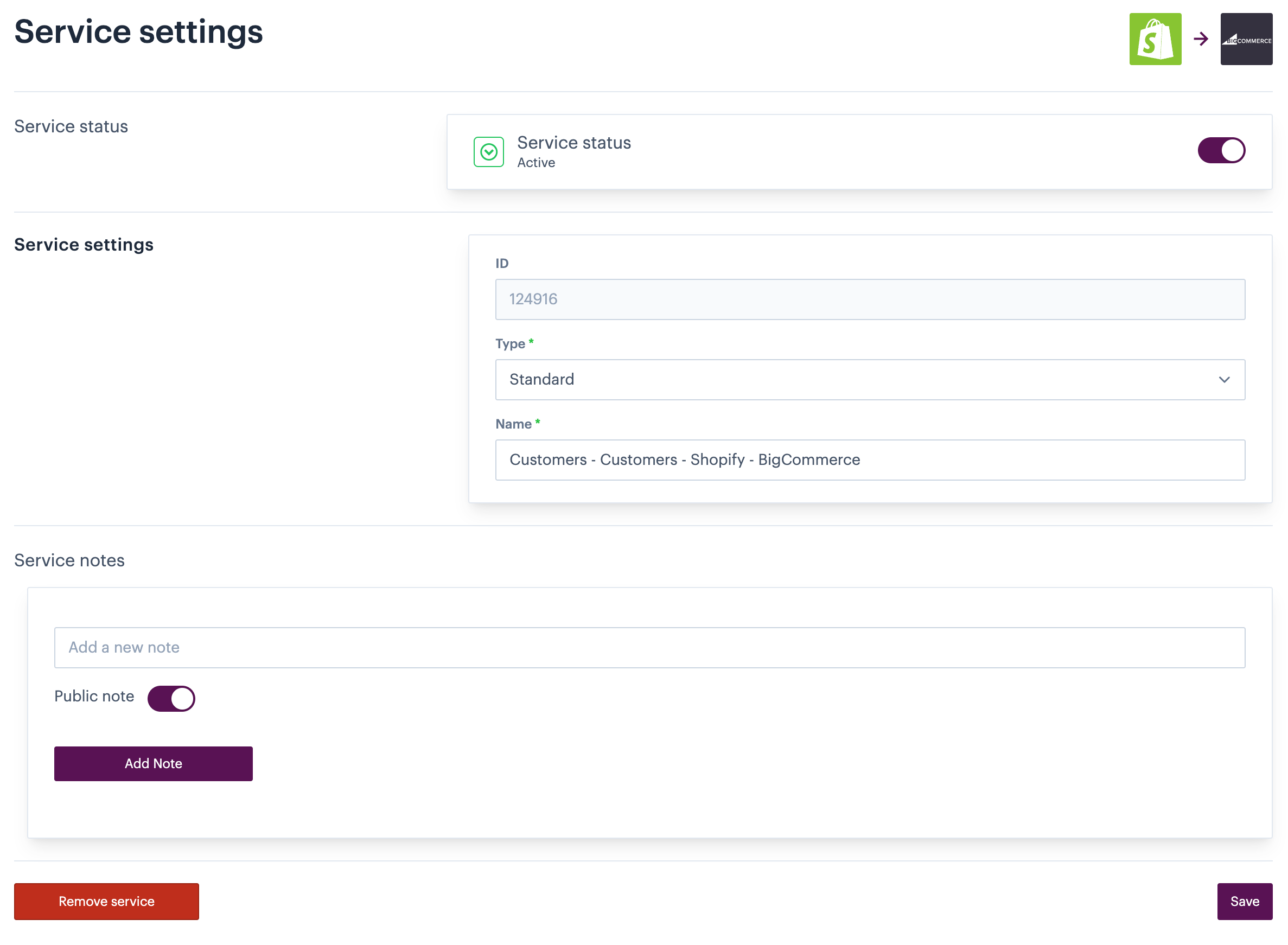
The **settings** tab can be used to activate/deactivate a service, change the service name, view/add service notes and - if necessary - remove the service:
## Working with service settings
Service settings options are summarised in the following sections:
* [Activating & Deactivating a service](#activating-and-deactivating-a-service)
* [Changing the service name](#changing-the-service-name)
* [Using service notes](#using-service-notes)
* [Removing a service](#removing-a-service)
### Activating & Deactivating a service
For a service to run as per configured trigger options, it must be activated - inactive services do not run. You can use the **service status** toggle option to activate/deactivate a service:
{% hint style="info" %}
The current status of services can be seen at a glance, from the services list - for example:

{% endhint %}
### Changing the service name
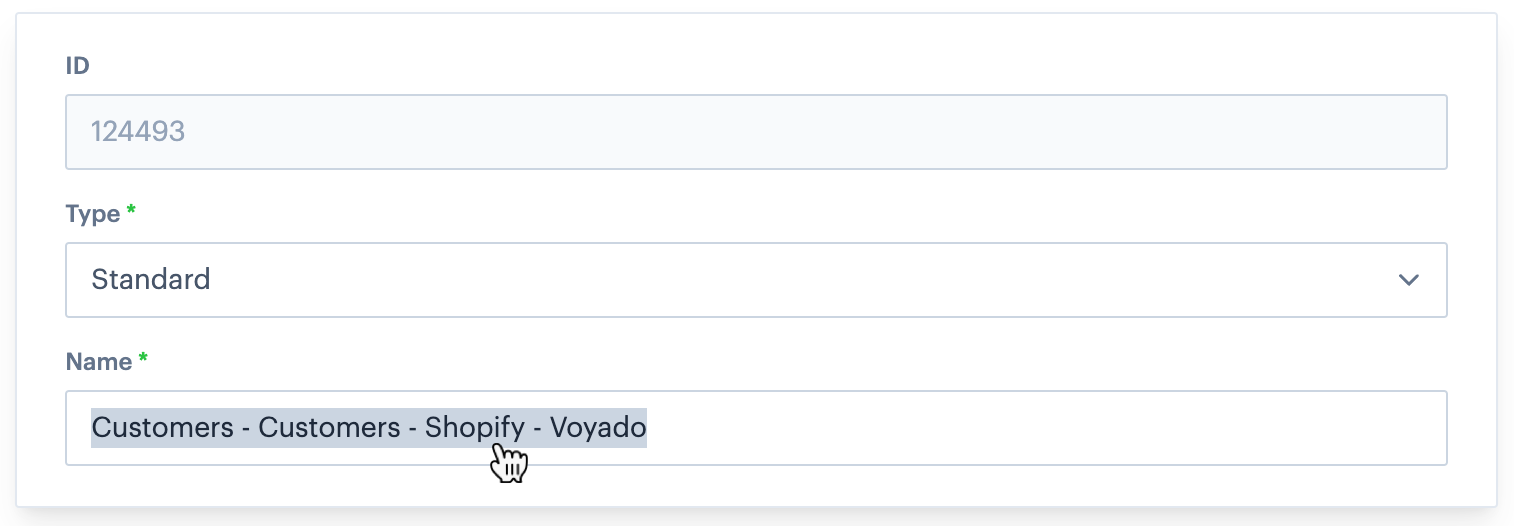
To change the service name, simply overwrite the existing value in this field:
{% hint style="info" %}
The **ID** and **Type** fields cannot be changed.
{% endhint %}
### Using service notes
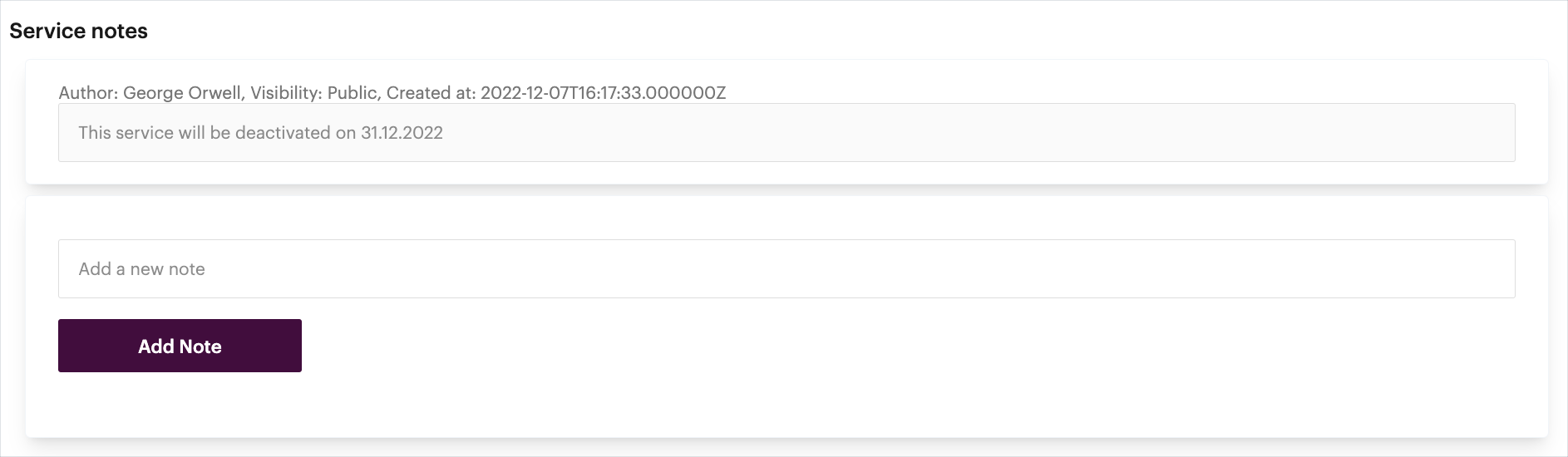
Service notes can be used for any number of reasons - for example, to provide some context about the service, to let other users know about changes you've made or sync failure actions that have been taken:
For detailed information about working with notes, please see our [service notes](/product-documentation/patchworks-services/working-with-services/updating-a-service/service-notes.md) page.
{% hint style="warning" %}
**All notes are public**, which means that any other users within your company profile can see them.
{% endhint %}
### Removing a service
An inactive service can be removed using the **remove service** button at the bottom of the page:\

For more information about removing services, please see our [removing a service](/product-documentation/patchworks-services/working-with-services/removing-a-service.md) page.