> For the complete documentation index, see [llms.txt](https://doc.wearepatchworks.com/product-documentation/llms.txt). Markdown versions of documentation pages are available by appending `.md` to page URLs; this page is available as [Markdown](https://doc.wearepatchworks.com/product-documentation/process-flows/error-reporting-and-exception-handling/run-logs-and-queue/working-with-run-logs/viewing-logs-classic.md).
# Viewing logs (classic)
## Introduction
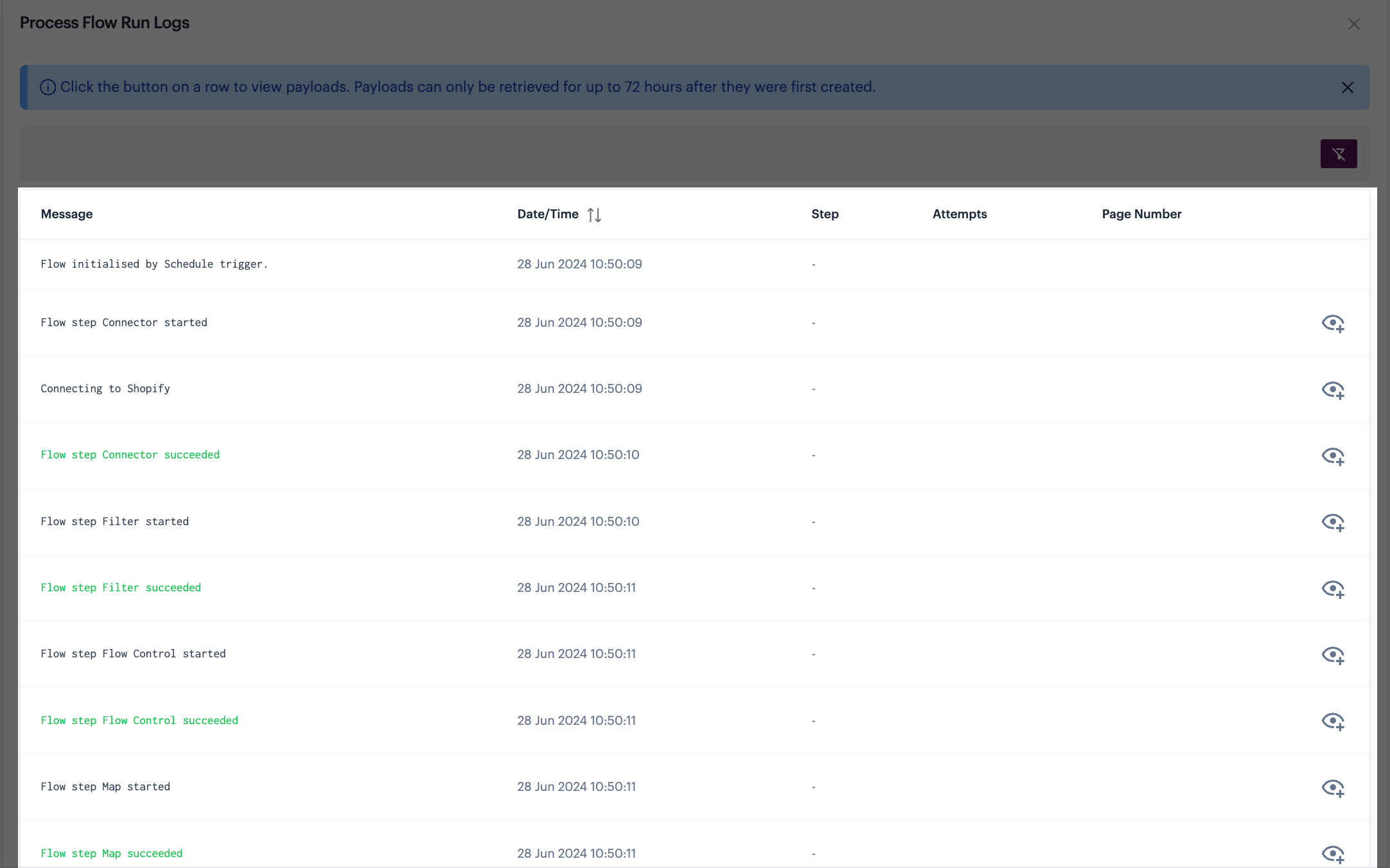
Having [accessed run logs](/product-documentation/process-flows/error-reporting-and-exception-handling/run-logs-and-queue.md) and selected the **view logs (classic)** option for a given flow run, you can view detailed logs and payloads for that run:
Here, you can scroll down the page to view information for each step of the process flow.
{% hint style="info" %}
Click the 'sort' option on the date column to toggle the log sequence in ascending/descending order.
{% endhint %}
## Viewing & downloading payloads
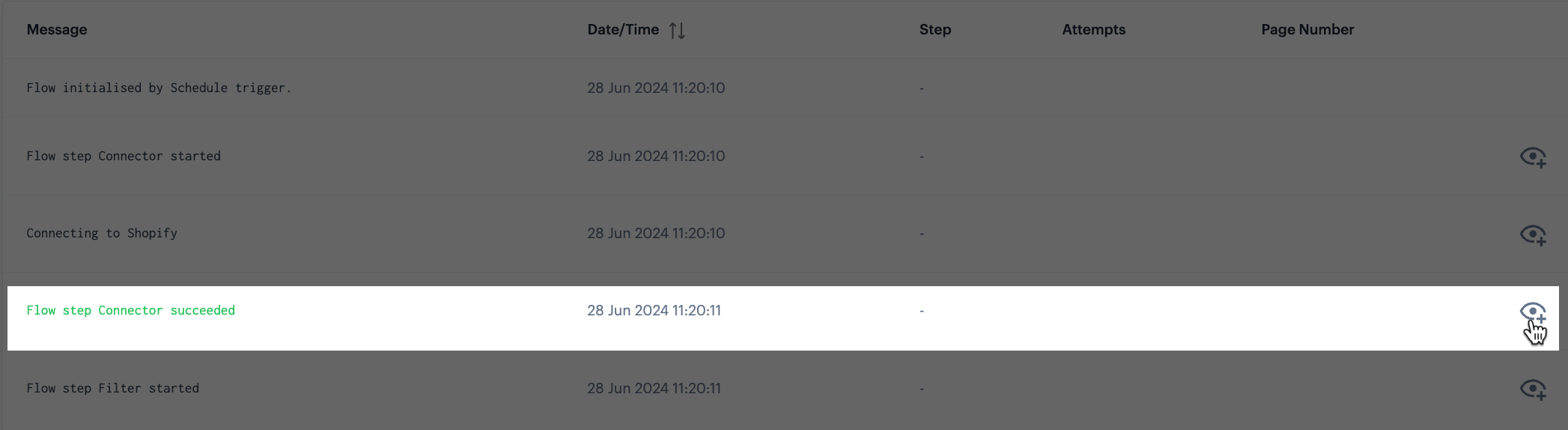
Click the 'eye' icon associated with the run that you want to access:
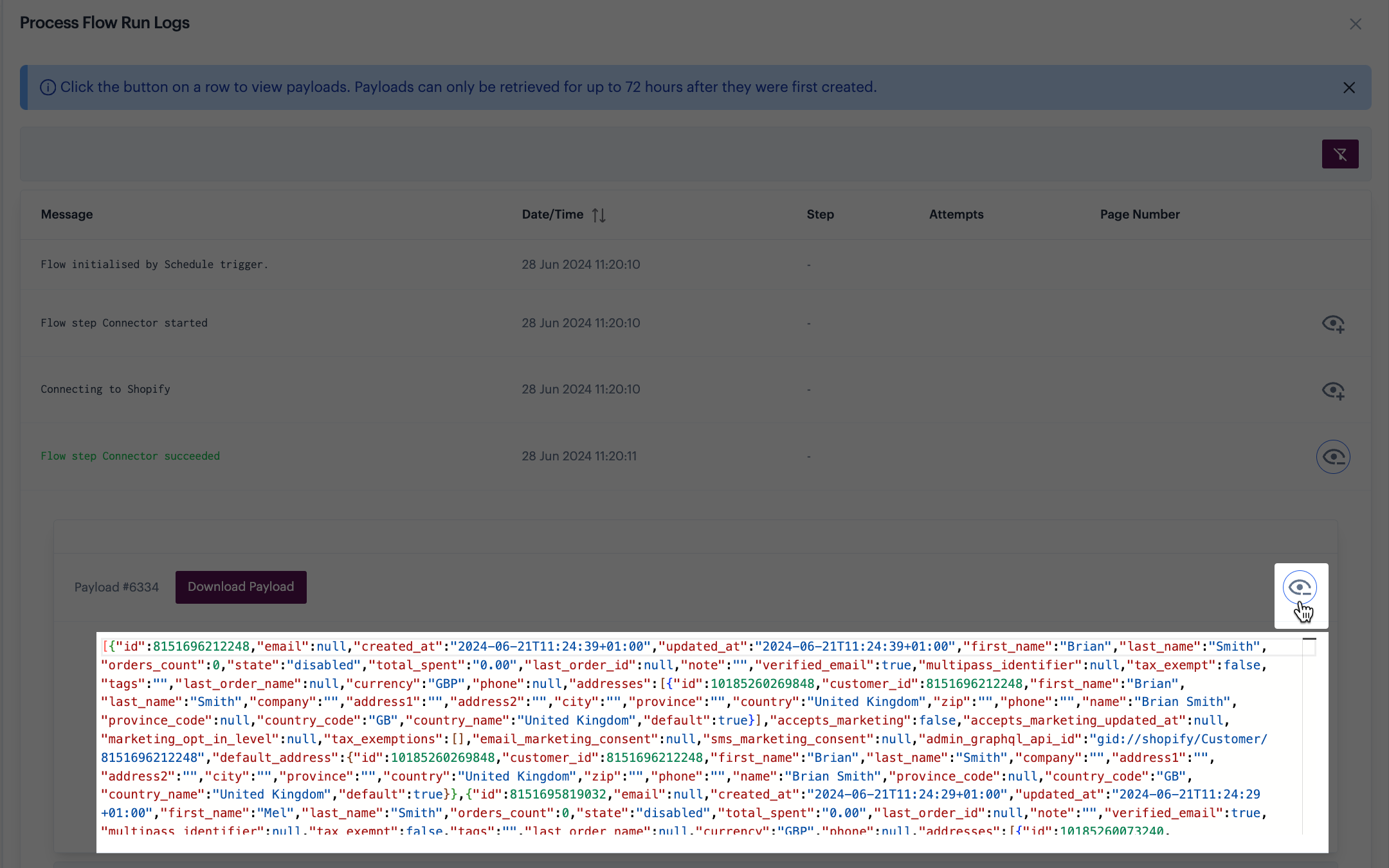
The log entry expands and further options are available. Click the 'eye' icon to show the payload:
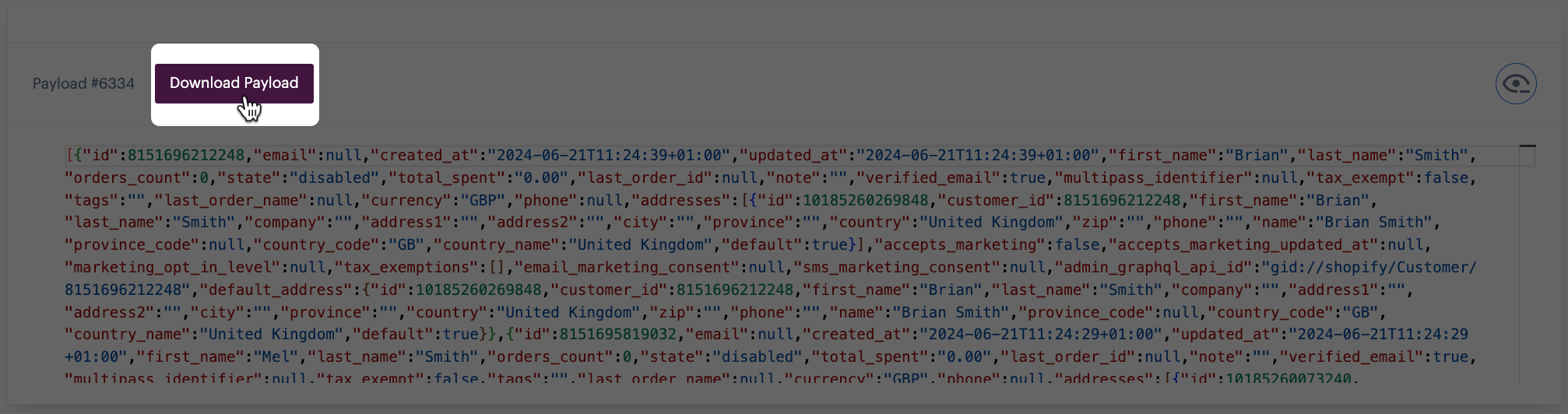
Longer payloads are trimmed but you can use the download option to retrieve the full content:
{% hint style="warning" %}
Payloads are available for 72 hours after the process flow has run.
{% endhint %}