> For the complete documentation index, see [llms.txt](https://doc.wearepatchworks.com/product-documentation/llms.txt). Markdown versions of documentation pages are available by appending `.md` to page URLs; this page is available as [Markdown](https://doc.wearepatchworks.com/product-documentation/patchworks-services/working-with-services/updating-a-service/using-a-payload-level-custom-script-in-services.md).
# Using a payload-level custom script in services
## Introduction
This page explains how to [associate a payload-level custom script with a service](#associating-a-payload-level-script-with-a-service), then [run the service and check input and output payloads](#running-the-service-and-checking-payloads).
{% hint style="danger" %}
If this is the first time you are using this script, you are strongly advised to work with a test service and ensure everything syncs as expected before applying to live services.
In Patchworks, a test service can be created by defining **test** (rather than **live**) source and destination connectors which point to sandbox URLs for the associated systems.
{% endhint %}
## Associating a payload-level script with a service
**Step 1**\
Use the **services** option to access an existing service that you'd like to [update](/product-documentation/patchworks-services/working-with-services/updating-a-service.md), or [add a new service](/product-documentation/patchworks-services/working-with-services/adding-a-patchworks-service.md): \
\

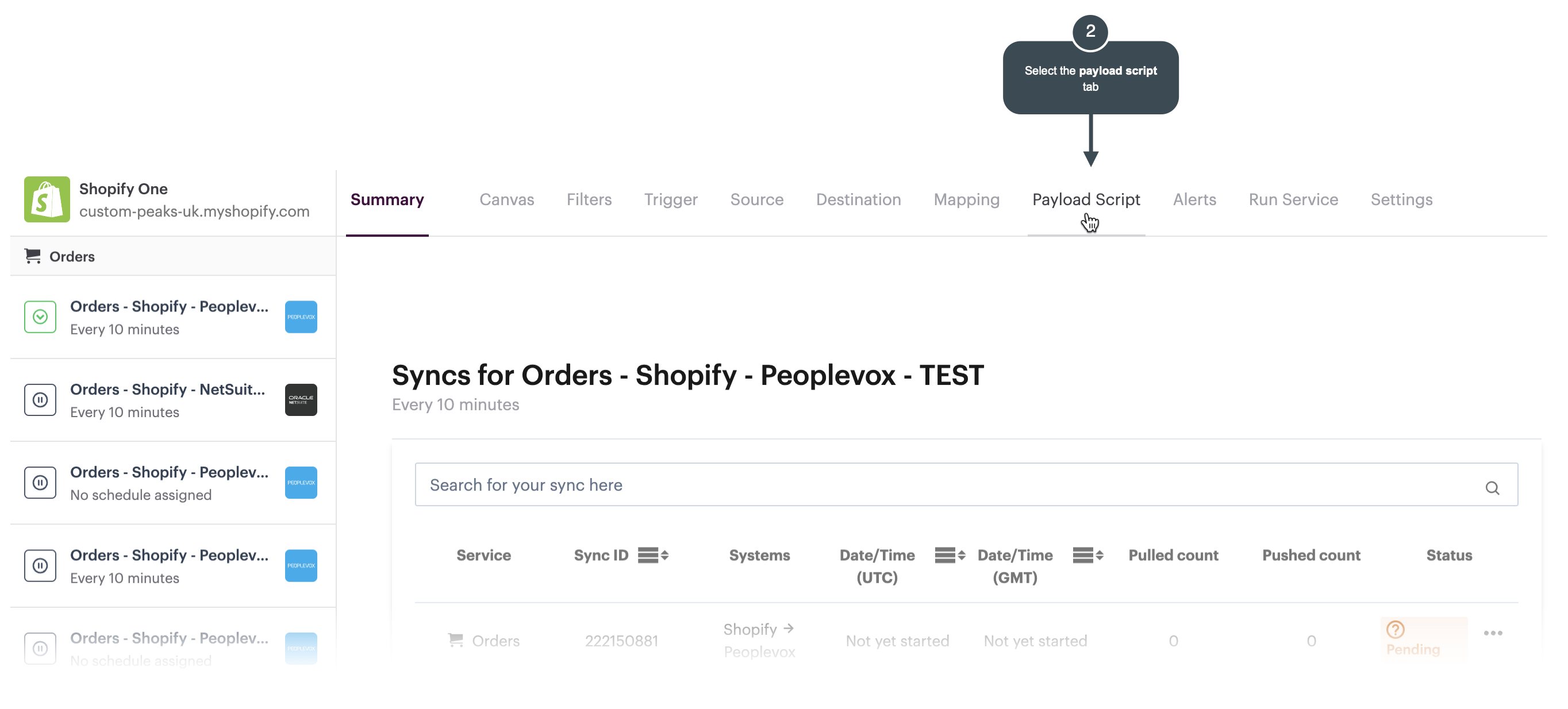
**Step 2**\
If at least one **payload-level** custom script has been added, a **payload script** tab is available - select it:
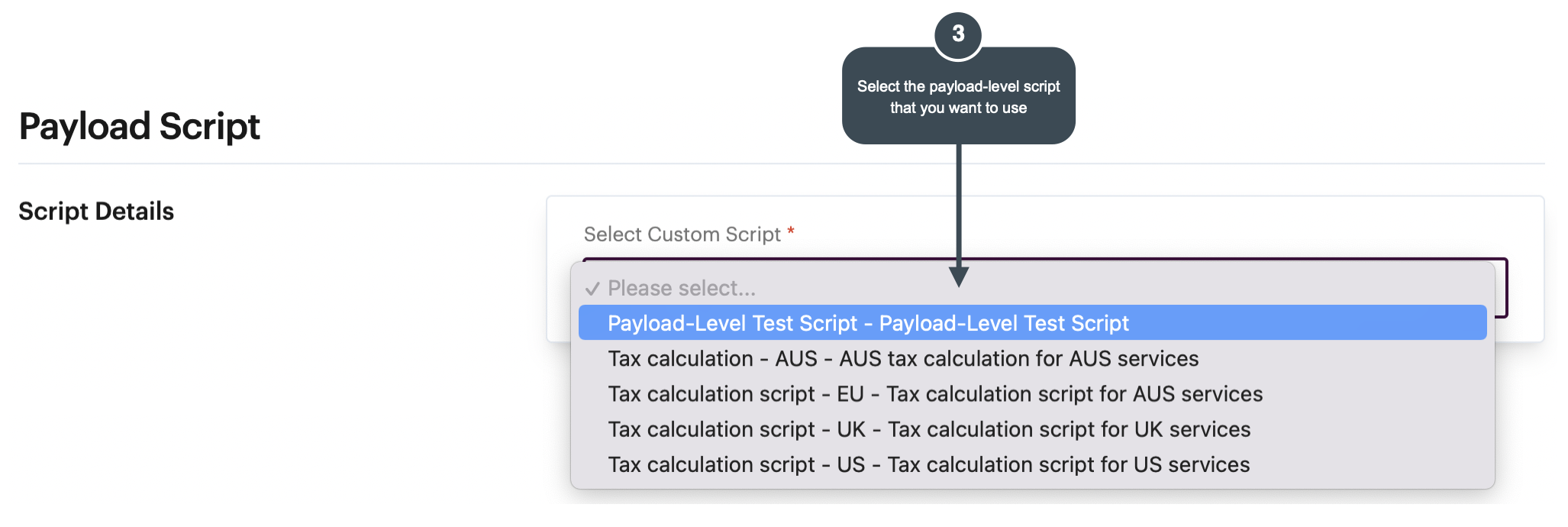
**Step 3**\
Click the **select custom script** field and choose the script that you wish to associate with this service - for example:
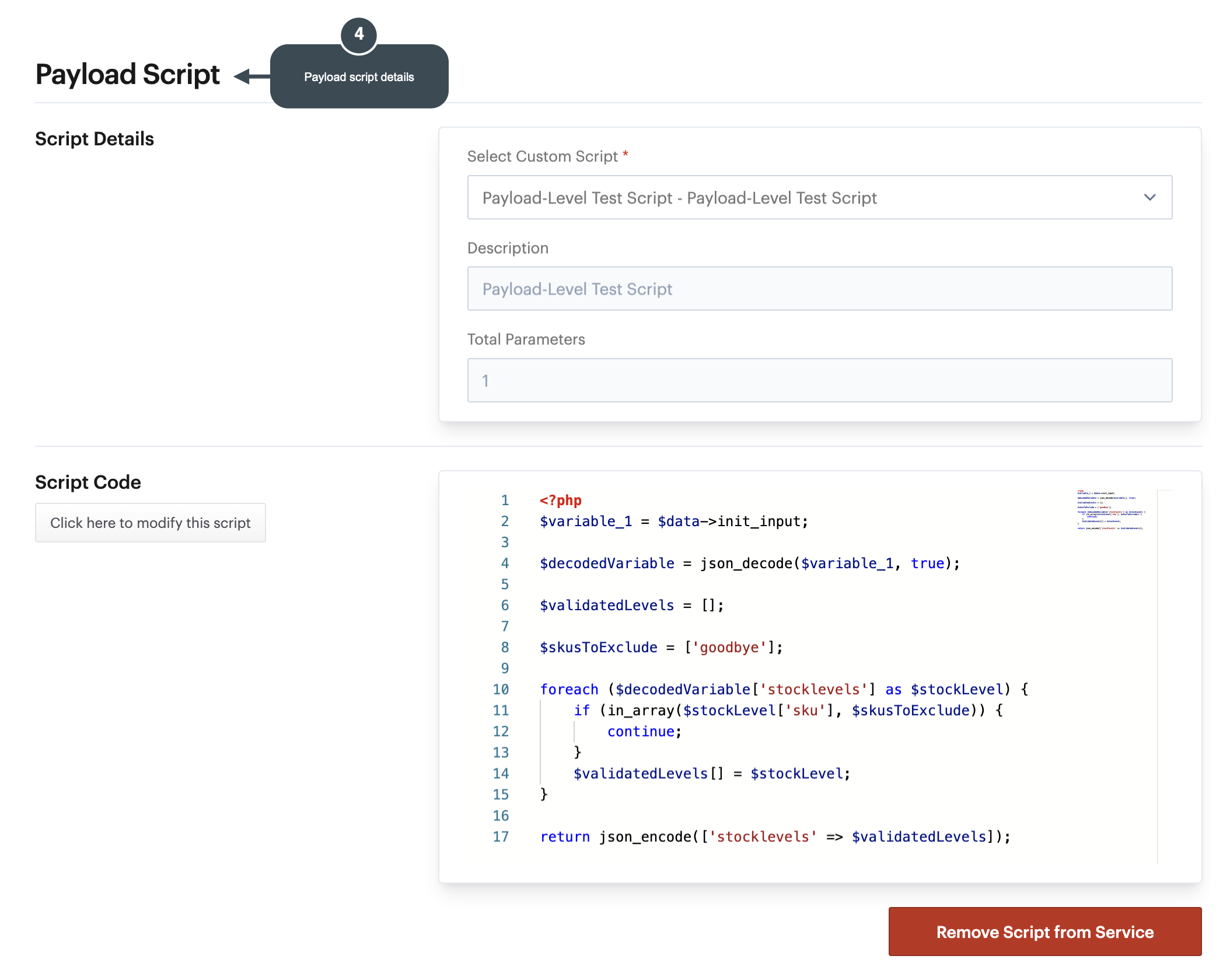
**Step 4**\
Details for the selected script are displayed:
You don't need to do anything here - everything is ready to go. However, if you wish to update the script, click the **modify this script** button to edit the script in the [manage custom scripts](broken://pages/t4yS4AdiuZFgXqgJzizY) area.
{% hint style="info" %}
If a script is associated with a service and subsequently edited and saved, changes are applied to associated services automatically.
{% endhint %}
**Step 5**\
Use the **add script to service** button to apply changes.
## Running the service & checking payloads
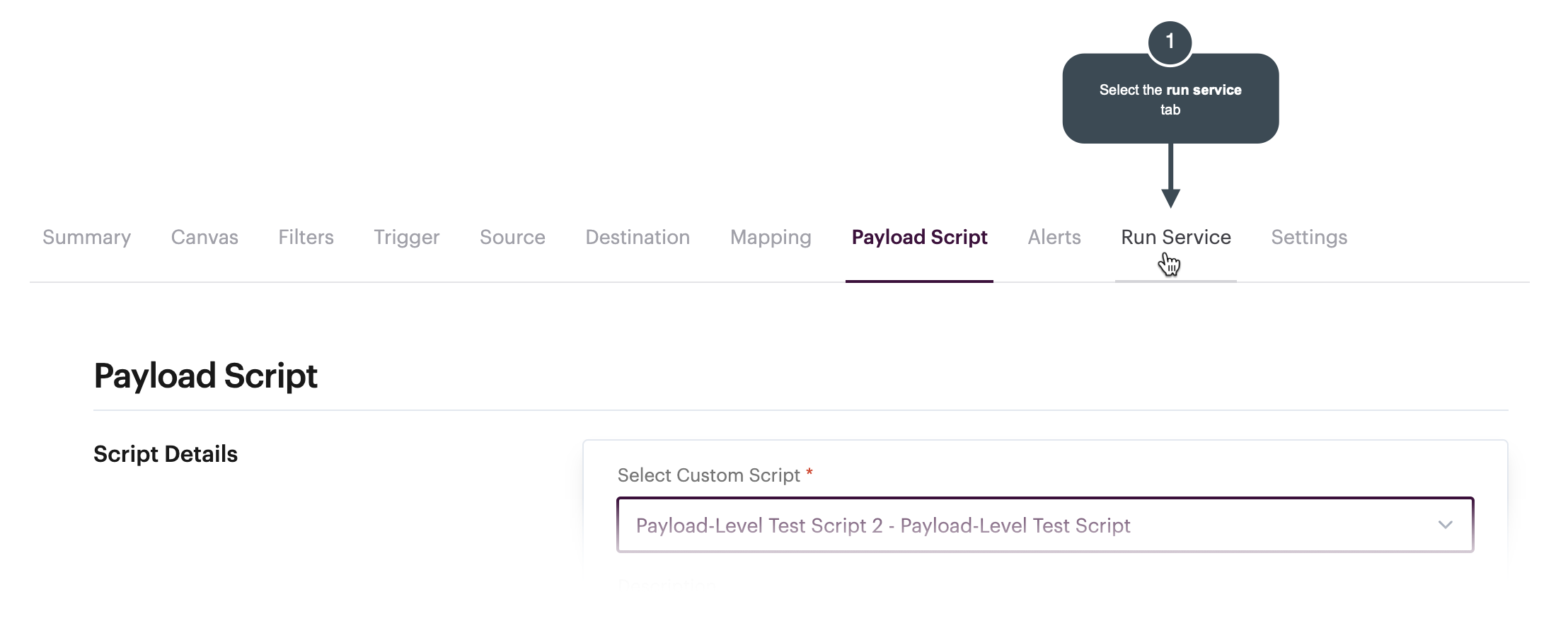
**Step 1**\
Select the **run service** tab:
**Step 2**\
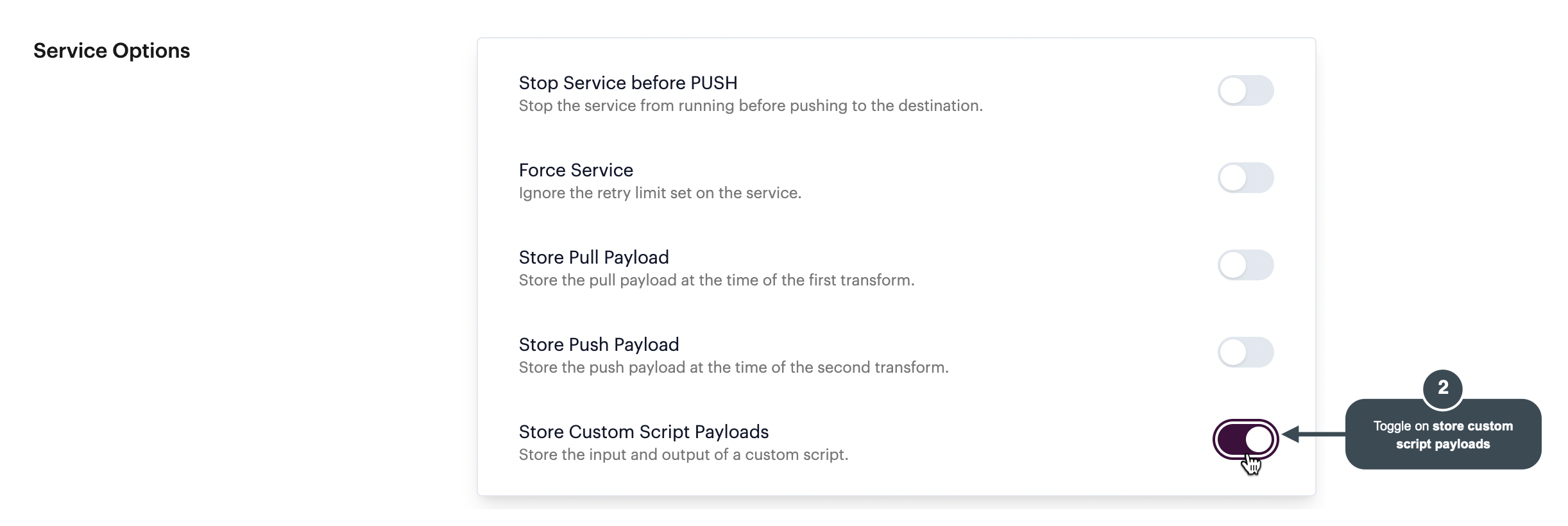
Scroll down to the **service options** section and toggle on the **store custom script payloads** setting:
**Step 3**\
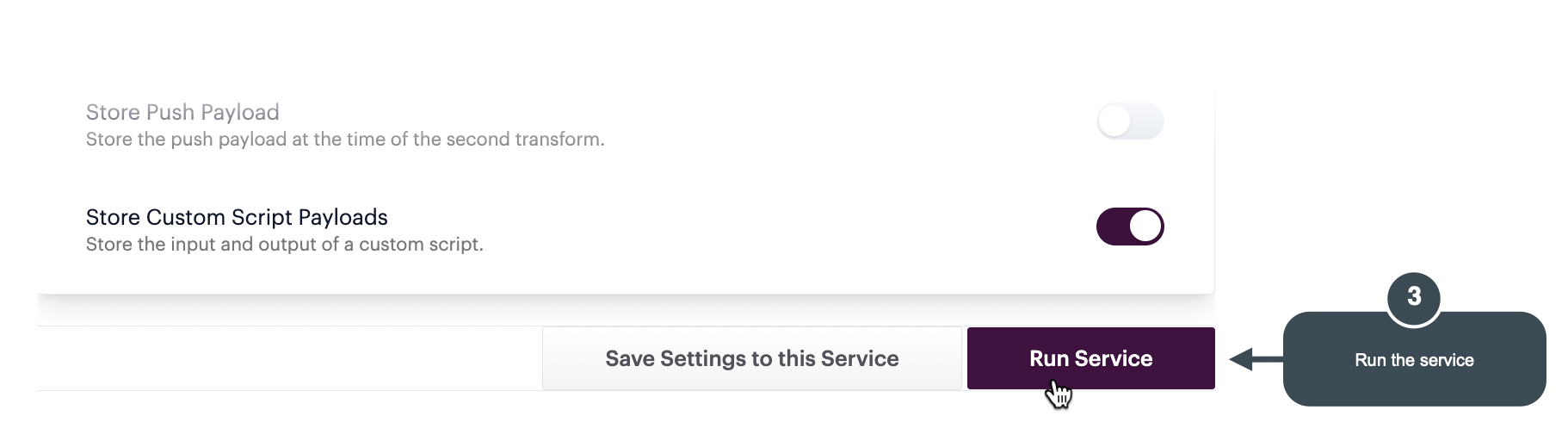
Set all other options as required and run the service:
**Step 4**\
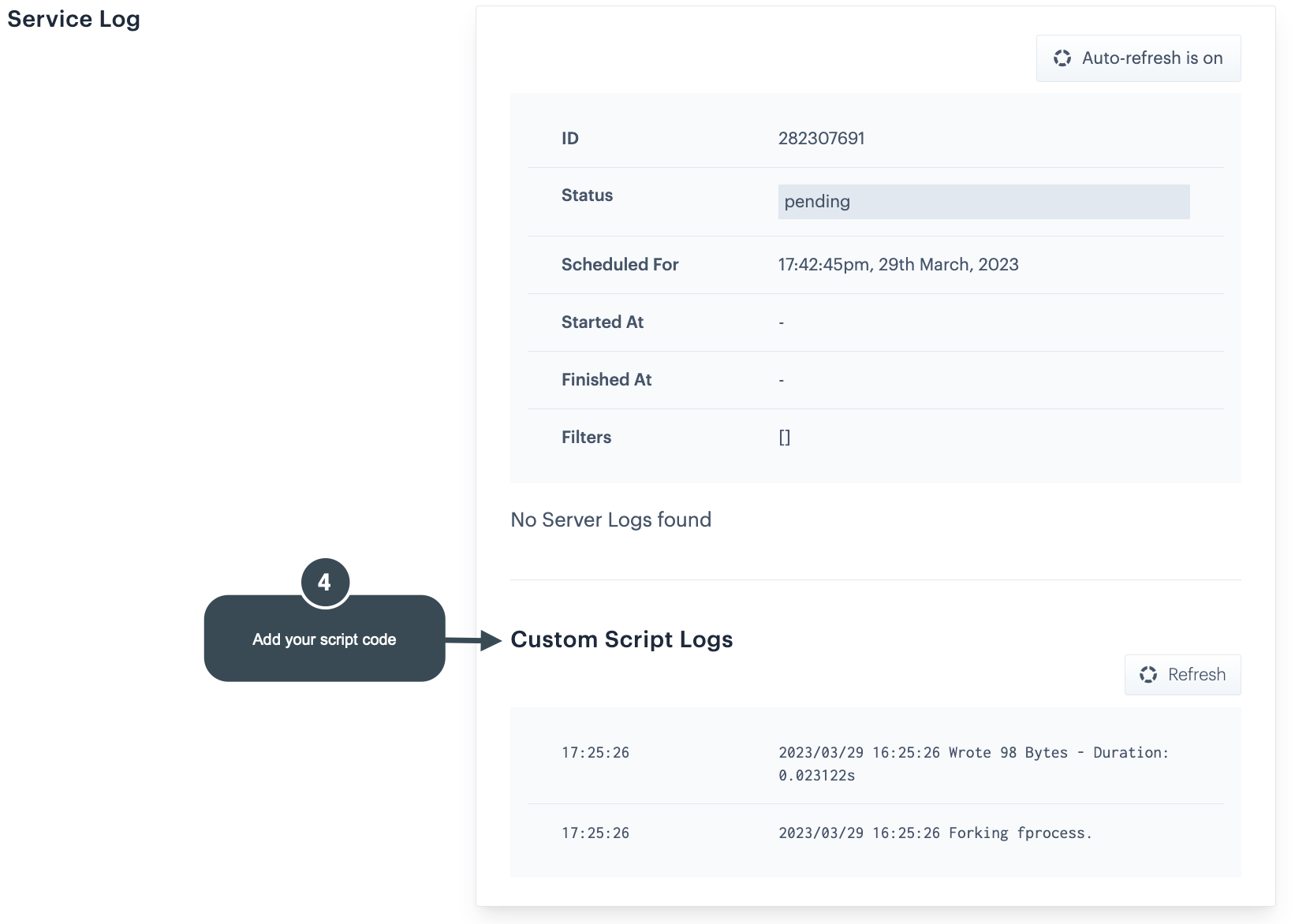
As the service runs, custom script activity is displayed in the the **custom scripts logs** section of the service log - for example:
**Step 5**\
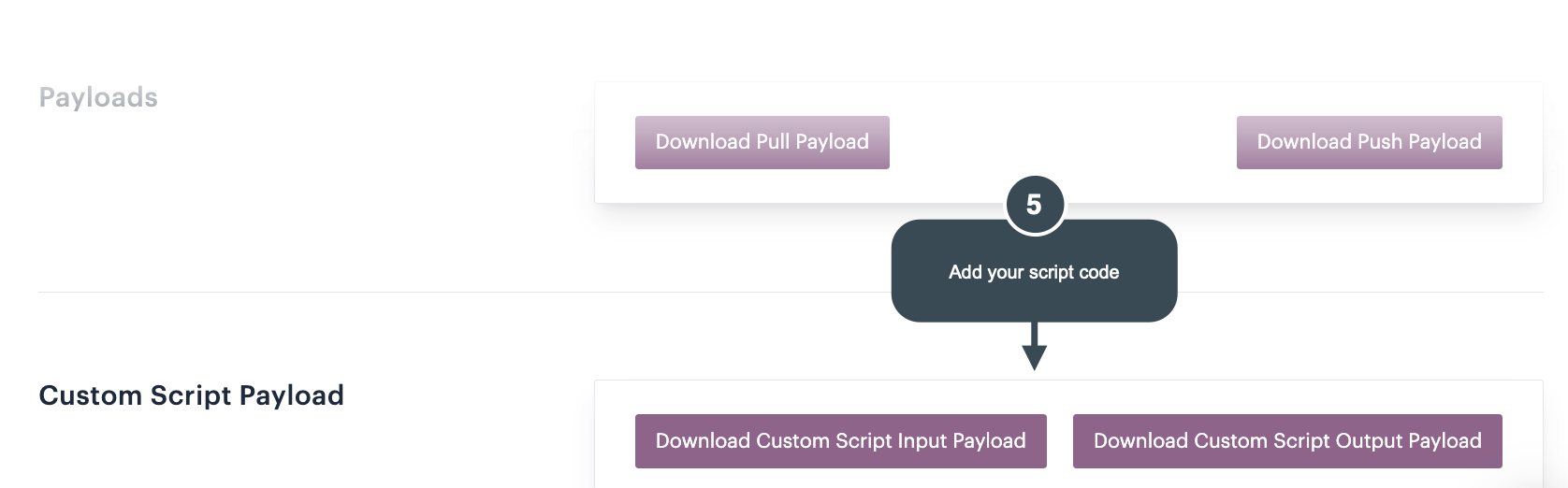
When the service run is complete and you opted to download custom script payloads, you can download these files using buttons in the custom script payload panel:
{% hint style="info" %}
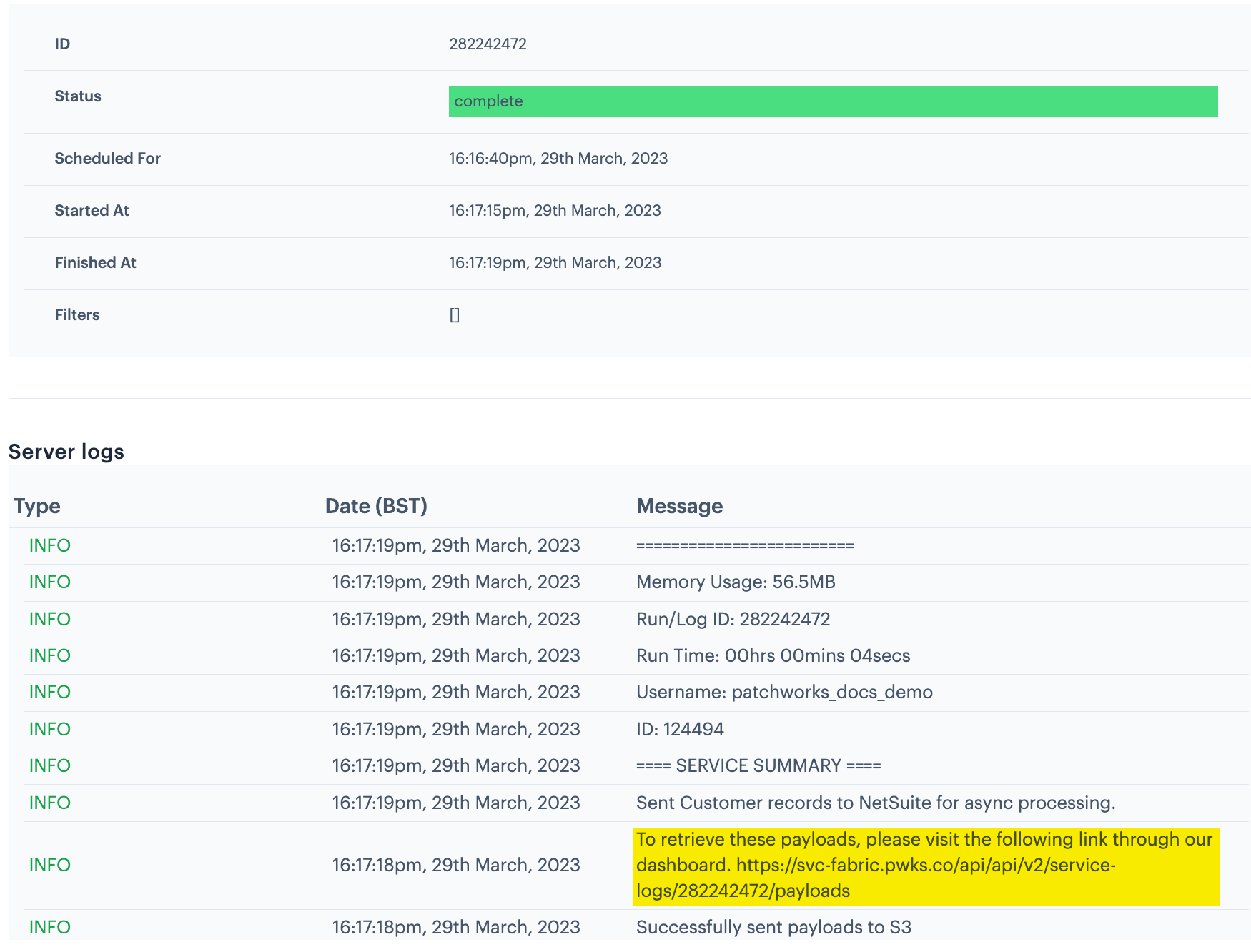
If you forget to download files at this point, a download link will be available in the [service log](/product-documentation/patchworks-services/reporting-and-logging/service-sync-logs.md) for 24 hours. For example:
{% endhint %}
{% hint style="info" %}
When a **payload-level** custom script is associated with a service, an **edit script** option is available on the service canvas. For example:

{% endhint %}